Technical Information
A Practical Guide for Product Designers, Engineers & Manufacturers
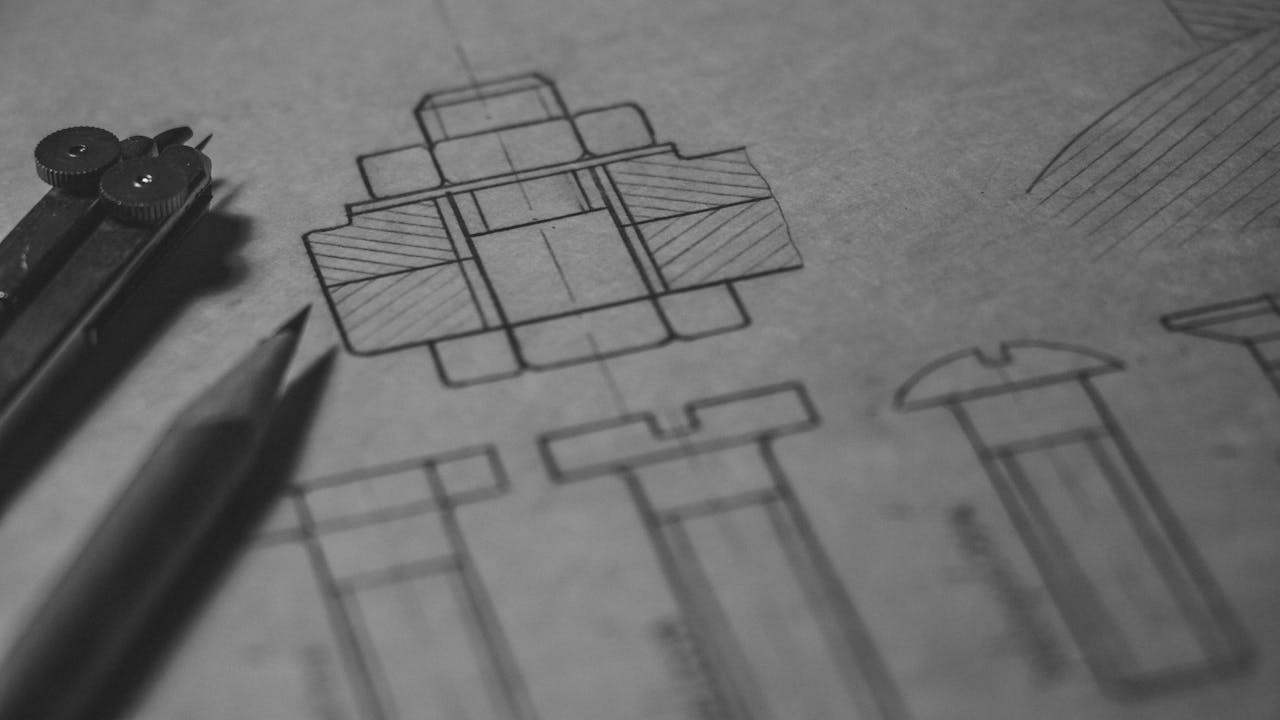
At Douglas Metal Finishing, we work closely with manufacturers and designers across the UK to achieve exceptional surface finishing results. This page offers practical advice and technical insights to help you design products that are both beautiful and plating-ready — while also reducing cost, improving durability, and ensuring optimal results from metal finishing processes.
Whether you’re creating architectural hardware, sanitary fittings, lighting, automotive components, or luxury items, good design choices make all the difference.
1. Understanding decorative metal finishing
Decorative finishes like chrome plating, satin nickel, and gold finishes are more than just aesthetic coatings — they provide durability, corrosion resistance, and brand appeal.
The final result depends not only on the plating process but on how the part is designed, polished, and prepared. Surface uniformity, drain holes, edge radii — all play a critical role.
2. Designing for better plating results
Smart design leads to better finishes. Here are some guidelines our engineers recommend to help you design for electroplating:
- Allow for proper drainage
Avoid deep recesses, blind holes, or rolled edges that trap plating solutions. Add drain holes where possible, especially for tubular or enclosed shapes. - Avoid sharp edges
Rounded corners and soft transitions help achieve consistent coverage and reduce over-thickness at protrusions. - Use consistent base materials
Avoid mixing metals in a single part. For example, combining steel with brass creates challenges in adhesion and uniformity. - Think about racking
We plate many components on custom-built racks. Design your parts so they can be securely held without masking critical surfaces. - Avoid air traps
Vertical features can trap air, preventing even coverage. Open designs or small vent holes allow gas to escape during processing.
3. What are “significant surfaces”?
In plating, not all surfaces are equal. “Significant surfaces” are areas that are:
- Visibly exposed in final use
- Touched by users
- Exposed to the environment
- Subject to wear or corrosion
We recommend marking these clearly in your drawings or CAD files when sending parts for finishing. This ensures quality where it matters — and helps reduce cost by not over-specifying hidden or internal surfaces.
4. Typical finishing process at Douglas
Most decorative metal finishes follow a multi-stage process:
- Mechanical polishing or bead blasting – to create a smooth, clean surface
- Cleaning and degreasing – to remove oils or contaminants
- Undercoating – copper or nickel is applied to build a foundation
- Final finish – applied using our precision techniques
- Inspection & quality control – we monitor thickness, gloss, colour consistency, and adhesion
- Protective lacquers or passivation – optional depending on finish type
You can learn more about specific options by visiting our pages on:
5. Lab testing, colour control & hardness
For projects that need consistency across sets or repeat runs, we can advise on checks and controls to support:
- Consistent colour between batches
- Alloy composition targets (where applicable)
- Durability and wear resistance expectations
- Coating thickness and uniformity (especially on complex shapes)
6. Common mistakes in plating design
Avoid the following to ensure your components are plating-friendly:
- Narrow slots or thin wall sections
- Recessed logos without proper radii
- Deep blind holes
- Sharp edges or unblended transitions
- Inconsistent base metals or unapproved alloys
If in doubt, contact our technical team for pre-production guidance. We’re happy to review part geometry and offer design-for-finishing advice.
7. Why choose Douglas?
We serve manufacturers across the UK — from bespoke fabricators to established brands. Our services include:
- Short-run and repeat-run finishing
- Custom racking and jig design
- Expertise in satin, polished, antique, and brushed finishes
- Guidance on RoHS/REACH considerations where applicable (please ask)
Learn more on our About Us page or Contact Us to discuss your project.
8. Want a sample or trial?
If you’re developing a new product or upgrading a legacy item, we’re happy to provide:
- Sample finishes
- Pilot runs
- Finish recommendations based on application
Explore our full list of finishes and get in touch to request samples or a quote.
For students & design schools
We regularly collaborate with product design students and design schools across the UK. If you’re preparing a prototype or looking to understand electroplating better, we’re happy to help.
Reach out via our Contact Page with your project brief.
Need technical advice on a finish, spec, or part design?
Send photos, drawings, or a short description of how the part will be used. We’ll help you choose the right finish system and set expectations before production.